
Survey first: $300–$750
A recorded camera run with distances marked. Yours to keep, and usually credited if the work goes ahead.
Relining turns a recurring drainage problem into a finished one. The joints that roots come through are sealed along the whole run, so there is no way back in, and nothing above the pipe gets disturbed to do it.
Relining is a structural repair, not a cleaning method, and the distinction matters when you are comparing quotes. Jetting restores flow through a pipe that is still cracked. A liner restores the pipe.
That also means it is not always the answer. It cannot correct a run that has sagged or lost its fall, and it has nothing to line against where a section has collapsed. A camera survey separates those cases in about an hour, and the answer changes the cost by a multiple.
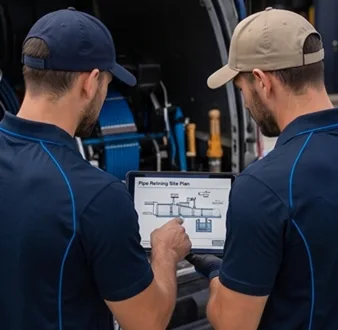
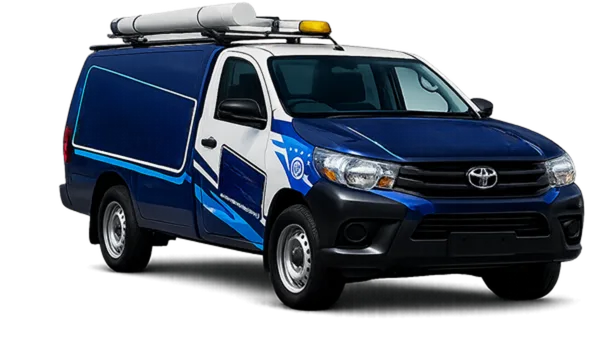
Very few homes of this age are still on their original layout. A second bathroom, a kitchen moved to the other side of the house, a granny flat out the back: each addition was joined into a system sized for the original plan.
The junctions where those additions were cut in are a common failure point, and they are worth looking at specifically. Relining handles a poor junction well, provided the camera has found it first.
The apartment blocks near the station funnel dozens of households into shared drains, where wipes and grease can block a whole building at once.
In a strata building the line between lot property and common property decides who pays, and it is worth settling before a quote rather than after. A branch serving your lot alone is generally yours; the stack it joins and anything in common property generally is not.
Relining changes the arithmetic here because it is usually cheaper than the alternative for a shared line, and because it can be done without opening ceilings in the lots below the fault. That tends to make the approval conversation shorter.
For a shop, café or clinic the real cost of a drainage repair is rarely the invoice. It is the days the doors do not open, and an excavation through a floor or a car park is measured in days.
A liner is installed from an existing access point and cures in hours, which is why commercial work is so often scheduled overnight or across a single closed day. The trading interruption is usually the deciding factor, not the price per metre.
Rising Georges River water and heavy storms leave silt and debris through the suburb’s stormwater lines, choking pits and pipes long after the water recedes.
Ground near water holds more of it, sits lower and moves more through the seasons than ground further up. Pipework laid decades ago has been flexed by that movement for its whole life, and joints open a fraction at a time rather than failing all at once.
It is why faults here tend to arrive as a slow decline rather than a sudden break, and why a camera often finds a run that is uniformly tired instead of one obvious defect. That pattern suits a full-length liner rather than a patch.
On a clay line the barrel is usually fine. What has gone is the mortar or rubber ring at each joint, and there is one every few hundred millimetres, which is a great many small openings after sixty or eighty years in the ground.
Original cottage-era clay drains sit alongside post-war and modern lines, and the oldest sections crack and collapse, blocking everything upstream.
That matters for the quote. You are not replacing a pipe, you are sealing a long series of joints, and a liner does the whole run at once rather than patching them one at a time.
The most expensive time to discover a failing sewer is after new tiling has gone down. The second most expensive is after the slab for an extension has been poured over it.
A camera run costs a fraction of either and takes an hour. If you are getting quotes for a renovation on a house of this age, book it in the same fortnight. Where relining is needed it is far cheaper before the works than after.
Houses of this era were generally drained in vitrified clay, laid well, and then left alone for sixty or seventy years. The pipe is usually still round and still sound. The joints have had seven decades of ground movement and root pressure.
That combination is close to the textbook relining case, which is why so much no-dig work in Sydney happens on streets built between the late 1940s and the 1960s.
A recorded camera run with distances marked. Yours to keep, and usually credited if the work goes ahead.
The prevailing 2026 Sydney range for residential sewer relining.
Proportionate for one fault in a sound run. We will recommend it over a full liner when that is what the camera shows.
For a run failing along its length, which on old clay is the common finding.
Plus reinstatement. On a bare lawn it can win. Under anything you would miss, it usually does not.
Indicative Sydney ranges for 2026. Your job is quoted in writing after the camera survey. Figures here are indicative of the 2026 Sydney market rather than a quote from us, you get your own number as a fixed price before any work starts.

Nothing is priced until a camera has been down the line. The survey is recorded, distances are marked from a known point, and the footage is yours.
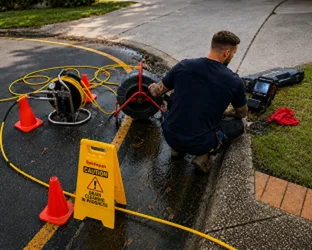
A single defect in a sound run wants a patch. A run failing along its length wants a full liner. A collapsed or sagging section wants excavation. The camera decides, not the quote.
Jet clean, install through the existing opening, cure in place. Water is off for part of the day and nothing above the pipe is disturbed.

Junctions reinstated, final camera run, and the compliance paperwork where the work is notifiable. You keep both recordings.
Leave your details and a licensed plumber will call back to arrange the survey. No quote is given before someone has seen inside the pipe.
Call for the fastest answer, or send the form and we will arrange a camera survey before anything is quoted.

Leave your details and our local Warwick Farm team will call you back fast.